
Love and the Portrait
The ImaginaryThis flow reframes the portrait as an emotional relation in which viewers recognize, interpret, and imaginatively encounter an absent person.
increasing Bearing strength in each event
 decreasing
Bearing strength in each eventdecreasingA Familiar Face Appears
The Portrait and Its Viewer
More than a painted surface
Looking at Pierre’s photograph can shift attention from the physical object to the person represented. The viewer does not merely inspect a set of colors but directs an imaginative act toward a familiar individual.
Personal knowledge gives the portrait a significance that its visible marks cannot supply by themselves.
Recognition as relation
The portrait’s likeness can prompt this movement, but it does not mechanically produce it. Consciousness must recognize and animate the material as a way for Pierre to appear.
Expression Beyond Exactness
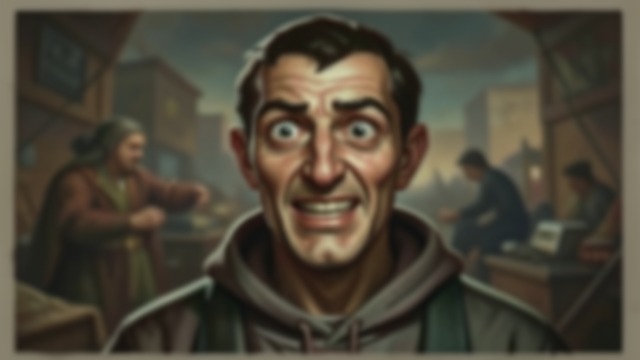
A Face Regains Life
The expressive quality
The caricature exaggerates Pierre’s features but seems to restore a liveliness that the precise photograph lacks. Its success shows that personal recognition can depend on affective expression, not just accurate detail.
The viewer’s attachment helps determine which features matter and how they stand for the person.
A personal image
The same portrait can mean differently to viewers with different histories and feelings. Sartre’s account makes this variation part of imaginative experience rather than an error in identifying the picture.
The Absent Person Present
Contact Through an Analogon
A mediated encounter
In the imaging attitude, the viewer attends to Pierre through the portrait without confusing the two. The pictured features become a means of encountering someone who is not physically present.
This relation can feel intimate while retaining the object’s essential absence.
The emotional boundary
The portrait does not replace Pierre’s independent reality. It can sustain recognition and feeling, but the actual person remains beyond what the image supplies.
Early in Part I, Chapter 2, Section I
As the caricature replaces the photograph
At the end of the portrait analysis
